
Most of us park the bike somewhere between Halloween and the first hard frost, and how you put it away decides how it wakes up in spring. A bike that sits four months on old gas and a dying battery is a tow-truck story. One that gets an afternoon of prep starts like you never left. This is our motorcycle winter storage guide: the step-by-step winterizing checklist, where to keep the bike (garage, outdoor shelter or soft cover), and how to wake it back up when the roads dry out.
Most of this is basic maintenance any rider can do with a basic set of tools (and some meat between the ears). You could just stick it in storage and forget about it, but these steps protect your investment and keep your motorcycle running smoothly season after season.
The checklist at a glance
1. Wash, dry and wax
2. Change the oil and filter
3. Inspect and lube the chain
4. Fill the tank
5. Add fuel stabilizer
6. Fog the cylinders
7. Drain the carburetor (older bikes)
8. Treat the seat, vinyl and rubber
9. Put the battery on a maintainer
10. Take care of the tires
11. Pull the damp out of the air
12. Keep mice out
13. Cover it right
14. Check on it every few weeks
Spring: wake it up the right way
The one-box option
Don't want to shop for every bottle? The Long-Term Storage Kit covers the four things that go bad on a parked bike in one order: STA-BIL fuel stabilizer for the gas, a Victron smart charger for the battery, 303 Aerospace Protectant for the seat, rubber and plastics, and a Star brite No Damp absorber for the damp air around it. You still change the oil and lube the chain yourself.
Before You Start: Your Manual and Your Supplies
Start by gathering everything you need so you get the job done right the first time, and do a little research on winterizing your specific motorcycle.
It might not feel natural to read your owner’s manual, but it often has winterization details specific to your bike: what kind of oil it likes, or the little screw on the carb that drains the gas. You know, the one you’ve always wondered about.
What You Need to Winterize Your Motorcycle
Gather these before winter arrives so you’re not behind the eight ball:
✓ Oil and an oil filter
✓ Fuel filter (if it's due)
✓ Fuel stabilizer
✓ Fogging oil
✓ Chain lube
✓ Battery maintainer (a solar one if there's no outlet)
✓ Moisture absorber
✓ Wash soap, mitt and microfiber towels
✓ Plugs or rags for the exhaust and intake
✓ A breathable cover or a shelter
✓ A tank of fresh gas
Your Motorcycle Winterization Checklist
Plan on an afternoon, 4 to 6 hours at the most. Do the dirty jobs first (wash, oil, chain) and the battery and cover last, so you're not hauling a clean, covered bike back out to change the oil. Grab your tools and work through these steps:
1. Wash, Dry and Wax
Road grime, bug guts and salt left on the bike sit on the paint and chrome all winter. Wash it in the shade with the engine cool, dry it right away with a microfiber towel, then put a coat of wax on the paint. Let it dry completely before it goes under anything; trapped water is what you're fighting all winter. The Bike Wash Kit has the bucket, wash and wax soap, mitt, drying towel and spray wax in one box.
2. Change the Oil and Filter
Used oil carries moisture and acids from a season of riding, and you don't want that sitting on engine parts for four months. Change the oil and filter now, using the oil your owner's manual calls for, so the bike sits all winter on fresh oil.
3. Inspect and Lube the Chain
The chain is an easily missed item that can result in serious injury if it fails. At the end of the season, inspect your chain for damage or spots with excessive wear. When in doubt, it’s better to get a new one than risk a rusty one. If your chain passes inspection, lube it up for the winter with the best chain lube for your bike.

4. Fill Up the Fuel Tank
Fill her up to about 95%, leaving a little room at the top. A full tank leaves less room for moist air, so less water condenses in your fuel through winter temperature swings, and that helps prevent rust inside the tank. It's an easy step to forget, so keep a jerry can around for topping off.
5. Stabilize the Fuel
Gas starts to go stale after about 3 months, and stale gas leaves gum and varnish in carbs and injectors. A fuel stabilizer stops that. STA-BIL says its STA-BIL Fuel Stabilizer keeps gas fresh for up to 24 months, at 1 oz per 2.5 gallons, so one 16 oz bottle covers a lot of winters on a 5-gallon tank. Add it to the fresh gas, then run the engine about 5 minutes so treated fuel gets through the whole fuel system. Fill the tank and skip this step, and you've done half the job.
6. Fog the Cylinders
Stabilizer protects the gas. Fogging oil protects the engine. It coats the cylinder walls so rust and condensation don't build up inside while the bike sits. Pull each spark plug, spray a few seconds of STA-BIL Fogging Oil into the cylinder, and put the plugs back in. On a fuel-injected bike, check your manual first. There might be a little smoke when you first fire it up in spring, but that's how you know it worked.

7. Drain the Carburetor (Older Bikes)
Read your owner’s manual on how to do this (or do a quick YouTube search). Draining the carb keeps the fuel from corroding your needles and stops stale gas from damaging the carburetor. Or pinch off the fuel line and let the engine run until it stalls. This is an important step for older, carbureted bikes.
8. Treat the Seat, Vinyl and Rubber
Leather and vinyl dry out and crack over a long sit, especially after a summer in the sun. Clean and condition the seat and saddlebags now; the Leather & Seat Care Kit has 303 3-in-1, Meguiar's leather spray and wipes, and microfiber cloths. Got a tour pack or hard bags? Wipe 303 Rubber Seal Protectant on the lid seals so they stay soft through the cold. Buff off the extra so the seat isn't slick in spring.

9. Put the Battery on a Maintainer
A battery left alone all winter slowly drains, and one that sits flat can sulfate and be done for good. Hook it to a smart maintainer (battery tender) that keeps it topped up without overcharging. Got an outlet? Victron says its Victron Blue Smart charger can stay connected all winter, and you can check the battery from your phone over Bluetooth. Bike lives in an outdoor shelter with no power? A Samlex 5W solar battery maintainer keeps a 12V battery topped up from daylight, no extension cord. Or pull the battery and keep it on a maintainer indoors, somewhere it won't freeze.

10. Take Care of the Tires
Motorcycle tires can last for many years with proper storage and maintenance. Concrete is cold, so keep your bike off the bare floor with a durable rubber floor, a sheet of plywood, or an old rug. Inflate the tires to the recommended pressure and take the weight off them with front and rear stands if you can; if not, roll the bike a little every few weeks. You can also treat them with a tire protectant, or remove the wheels and store the frame and tires separately.
11. Pull the Damp Out of the Air
Rust and mildew start with damp air that has nowhere to go. In a closed-up shelter or under a cover, a no-power absorber like the Star brite No Damp pulls water out of the air into a cup you empty. Set it level and away from the seat and bags, because the liquid it collects damages leather. In a garage or shed with an outlet, the Moisture Defense Kit adds a Davis Air-Dryr. Use the Air-Dryr only in a garage, shed or storage unit, never inside a fabric shelter or under a cover.
12. Keep Mice Out
Mice look for quiet, sheltered spots like air boxes and exhausts, and a winter of nesting can mean chewed wires and a filter full of fluff. Plug the exhaust and intake openings, and hang a bright tag on the handlebar so you remember to pull the plugs before you start it. Dryer sheets or a rodent deterrent around the bike help too.
13. Cover It Right
Skip the plastic tarp. It doesn't breathe, so it traps moisture against the bike. Use a breathable cover or a shelter (how to choose is below). If your cover or shelter cover has a few seasons on it and rain soaks in instead of beading up, clean it and re-treat it before winter. The Cover Care Kit has 303 Mold & Mildew Stain Remover, 303 Fabric Guard to bring back the water repellency, and 303 Aerospace Protectant for the bike's vinyl and rubber. Fabric Guard goes on the fabric. Aerospace Protectant stays off it.
14. Check On It Every Few Weeks
Have a look at your bike every three weeks or so to make sure nothing is nesting in there and it’s not getting wet. Don’t start it just to let it idle: a short idle in the cold creates condensation in the engine and exhaust without getting hot enough to burn it off. With stabilized fuel and the battery on a tender, your bike can sit through a whole winter and start right up.
Where to Store Your Motorcycle for Winter: Garage, Outdoor Shelter or Soft Cover
Where the bike sits matters as much as the prep. Sun, rain, snow and condensation are what turn a parked bike into a spring repair bill. Here's how the three usual choices stack up.
A garage is the easy answer if you've got the room. It's dry, it's out of the wind, and there's power for a battery maintainer. The catch is space. Plenty of riders have a garage and still keep the bike outside because the car, the project bike or the workbench got there first. A storage facility with heated space works too, but you pay every month and the bike is across town when a warm weekend shows up.
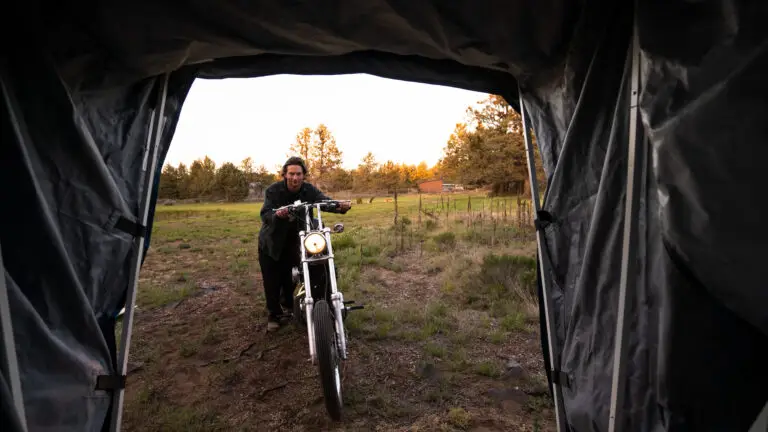
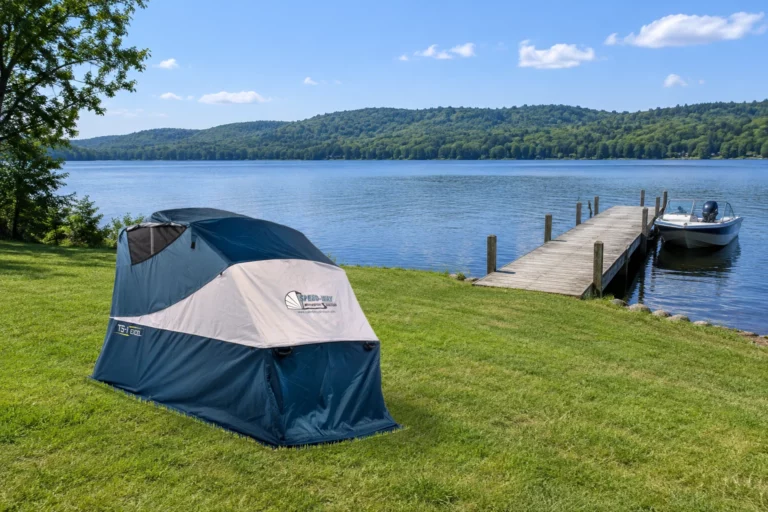
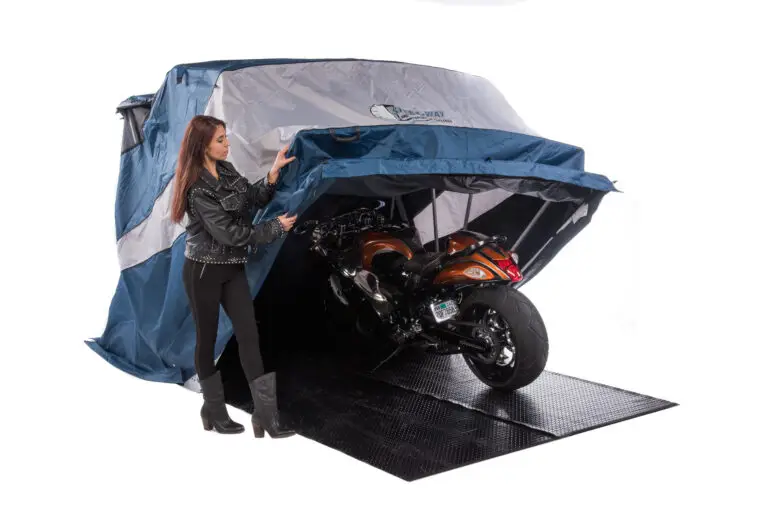
An outdoor shelter is the middle ground. A portable motorcycle garage like ours sits on your driveway or pad, bolts down and locks closed. The steel frame stands up to several feet of snow, the vent windows help keep condensation down, and nothing touches your paint. There are three sizes: the Sport shelter, the Touring motorcycle shelter for baggers and bikes with a tour pack, and the Deluxe for trikes.
A soft motorcycle cover is the cheap option, and it's fine in a garage or carport. Outside all winter it's the weakest of the three: it sits right on the paint, it moves in the wind, and the snow load lands on the bike. If a cover is the plan, get one that breathes, strap it down tight, and brush the snow off after storms.
Thinking about a shed or a pop-up tent too? Our motorcycle shelter vs. tent vs. shed vs. cover comparison lays out the pros and cons of each.
If Your Bike Stays Outside This Winter
You can store a motorcycle outside all winter with the right prep and protection. Winterize it first with the checklist above, then keep it under a breathable shelter that sheds rain and holds snow. Living with HOA rules, in a mobile home park or in an apartment? See our guide to motorcycle storage for HOAs, mobile homes and apartments.
✓ Pick a shelter that holds snow. A Speedway Shelter’s heavy-duty steel frame stands up to several feet of snow, and its vent windows help keep condensation down. Brush heavy snow off after big storms.
✓ Anchor it down. Mounting bolts for concrete or asphalt are included: 6 with the Sport and Touring shelters, 8 with the Deluxe.
✓ Keep the tires off bare concrete. A rubber shelter floor gives them a better surface.
✓ Lock it. The shelter locks closed, so nobody can see what's inside. Want a padlock that makes noise? The Shelter Owner Kit adds a Banshee alarm padlock with a 110 dB alarm, plus Fabric Guard and mildew remover for the cover. Neighborhood cats a problem? Here's how to keep cats off your motorcycle.
✓ Watch the trees. Winter wind, snow, and ice bring down limbs, so park away from overhanging branches if you can. Here’s how to protect your motorcycle from falling branches.
Not sure which size fits your bike? Compare the Sport, Touring and Deluxe shelters, or email us at info@speedwayshelters.com and our family team will help you pick.
Spring Wake-Up: How to De-Winterize Your Motorcycle
When the roads dry out, don't just thumb the starter. Run through this first:
✓ Pull the exhaust and intake plugs (that's what the tag on the bars is for).
✓ Look in the air box for nests and check for anything chewed.
✓ Put the charged battery back in, or unhook the maintainer.
✓ Set the tire pressure and look for cracks or flat spots.
✓ Check the oil level, brake fluid and coolant, and squeeze the brakes before you roll.
✓ Lube the chain again.
✓ Start it and let it warm up. A little smoke from the fogging oil is normal.
✓ Keep the first ride short and easy while you make sure everything works.
Won't start? Check the easy stuff first: a flat battery or stale gas, which is what the maintainer and the stabilizer were for.
Final Thoughts on Winter Motorcycle Storage
Short version: treat the gas, keep the battery charged, keep the bike dry, keep the mice out, and keep it out of the snow. Do that and spring is a ride, not a repair bill.
Motorcycle Winter Storage FAQ
How do you store a motorcycle for the winter?
Winterize it, then park it somewhere dry. Change the oil, lube the chain, fill the tank and add fuel stabilizer, and put the battery on a tender. Fog the cylinders, drain the carb on an older bike, wash and wax it, and get the tires off bare concrete. Plug the exhaust against mice and check on it every few weeks.
What do you need to winterize a motorcycle?
Oil, an oil filter, a fuel filter, fuel stabilizer, chain lube, a battery tender and a tank of gas. Add fogging spray for the cylinders and a basic set of tools. Your owner's manual tells you which oil the bike takes and where the carb drain screw is. Plan on 4 to 6 hours at the most.
Should I start my motorcycle during winter storage?
No, not just to let it idle. A short idle in the cold makes condensation in the engine and exhaust, and the bike never gets hot enough to burn it off. With stabilized fuel and the battery on a tender, it can sit all winter and start right up in spring.
Should I fill the gas tank before winter storage?
Yes, fill it to about 95%. A full tank leaves less room for moist air, so less water condenses in the fuel and the tank is less likely to rust inside. Gas starts to go bad after about 3 months, so add fuel stabilizer and run the engine about 5 minutes to get treated fuel through the system.
Can you store a motorcycle outside all winter?
Yes, with the right prep and the right cover. Winterize it first. Skip the tarp, because it doesn't breathe. A Speedway Shelter's steel frame stands up to several feet of snow, its vent windows help keep condensation down, and anchor bolts for concrete or asphalt come in the box. Brush heavy snow off after a big snowfall.
How do I look after a motorcycle stored in a shed over winter?
Look it over every three weeks or so for nests and wet spots. Keep the battery on a tender, or take it indoors if there's no outlet. Keep the tires off bare concrete with a rubber floor, plywood or an old rug, and roll the bike a little every few weeks if it isn't on stands. Pull the exhaust plugs before you start it.
How do you de-winterize a motorcycle in spring?
Pull the exhaust and intake plugs, check the air box for nests, and put the charged battery back in. Set the tire pressure, check the oil, brake fluid and coolant, and lube the chain. Then start it and let it warm up. A little smoke from fogging oil is normal. Keep the first ride short.
How do I keep a motorcycle battery charged with no outlet?
Use a small solar maintainer, like a 5W panel wired to the battery with ring terminals and set where it gets daylight. Or take the battery out and keep it on a plug-in maintainer indoors, somewhere it won't freeze.
What's the best cover for storing a motorcycle outside in winter?
One that breathes and keeps the snow off the bike. A plastic tarp traps moisture against the paint. A soft cover breathes but still sits on the bike and takes the snow load. A Speedway Shelter stands up to several feet of snow on a steel frame, has vent windows for condensation, and bolts to concrete or asphalt.