Skip to content

Family-owned for 18+ years · Usually ships the next business day · 10-year frame warranty

Home / Bike Blog

When Cheap isn’t Cheap: Why Motorcycle Covers Might Not Be the Best Bet

Updated Nov 8, 2026 · 10 min read · By Joshua Mezman, owner

cheap motorcycle cover destroyed exposing bmw motorcycle to rain and the elements

For motorcycle owners without a garage (or without room in their garage for their bike), the struggle to provide secure, convenient, and all-weather motorcycle storage is real. A motorcycle cover appears to be a budget-friendly option for those tight on space but still looking to protect their bike. Motorcycle covers are readily available, come in a variety of options, and are easy to throw on any chopper, hog, or moped. However, while a motorcycle cover can offer some protection and has certain advantages, the limitations and potential drawbacks often outweigh the benefits, especially for long term or year-round motorcycle storage. If you ride a bagger, our Touring shelter has room for the saddlebags and tour pack.

Let’s take a deeper look into why a motorcycle cover might not be the best choice for storing your beloved bike by comparing both the pros and cons to help you make an informed decision when it comes to protecting your two-wheeled investment.

The True Cost of a Motorcycle Cover

motorcycles stored under tarps

The Appeal of Affordability

There’s no denying the initial allure of motorcycle covers. Compared to other storage options like motorcycle shelters or pods, covers are significantly cheaper. Considering how much is a motorcycle cover as an investment, it’s important to determine if it’s worth the buy. (Hint: it might not be!) Prices for motorcycle covers run about $30 on the low end, up to $180 on the high end depending on weight of fabric and size of bike. This makes them an attractive option for those not wanting to spend a lot of money upfront on protecting their ride. 

Additionally, their lightweight nature and compact size make them seem more convenient as they can be folded up and stored when not in use. Plus, they don’t require any permanent installation. 

Hidden Headaches & Costs of Covers

Unfortunately, the initial affordability of motorcycle covers are overshadowed by the limitations and brings to question if they really are more affordable and convenient than other motorcycle storage options. Plus lets face it, if your a biker you might as well invest in some decent storage option as your going to use it for a very long time. Let’s breakdown the true cost of a cheap motorcycle cover: 

1. Covers Offer Limited Protection

A motorcycle cover offers basic protection from dust, sun, and light rain. But, covers are not a suitable shield against harsher elements like snow, hail, extreme heat, or strong winds. (Strong winds can rip your motorcycle cover and make it a liability. Same goes for extreme heat and sun causing your motorcycle cover to crack.) Additionally, even the most heavy duty motorcycle cover offers minimal security against theft or vandalism. .

2. Scratched Paint

The snug, low-profile fit of a motorcycle cover means that it physically touches your bike. If dirt and dust accumulates under the cover, or if the cover itself develops small teasers, it can rub against the paint job like sandpaper, causing scratches or swirls. You’ll also have to be careful not to rip the motorcycle cover on sharp edges of protruding parts on your bike.

Hot exhaust pipes are another major concern. Before covering your bike you’ll need to ensure that the engine has completely cooled to avoid potential heat damage. It can sometimes take hours for exhaust pipes to cool enough to be safe to have fabric resting on them. No one wants bits of a melted motorcycle cover on their chrome.

3. Motorcycle Cover Maintenance Headaches

A motorcycle cover requires a certain level of upkeep. Firstly you need to constantly pull them on and put them away. These covers can get dirty with mold and mildew building up over time, requiring regular cleaning and maintenance. And after a ride, especially in dusty or wet conditions, you’ll need to clean your bike before putting on the cover. So, this means after a long and dirty ride, you have work to do cleaning and prepping before you can safely store your motorcycle. This adds an extra step to your post-ride routine. Maybe motorcycle covers aren’t that convenient after all. How much is your time worth?

Beautiful motorbike

The FOMO Factor: Fear of Missing Out of Protection

Let’s face it, motorcycle covers offer little security when it comes to motorcycle storage options. It’s more of a deterrence against theft, as anyone with a sharp blade can remove a cover in not a lot of time. If your bike is stored in a public or semi-public space, the peace-of-mind factor provided by a more secure storage solution, like a motorcycle shelter or pod, is invaluable insurance. Living with constant worry that your motorcycle could be stolen or vandalized can take away from the joy of owning one.

Considering the Long-Term Impact of Covers

Besides the immediate concerns detailed above, even the best motorcycle cover can have a negative impact on your ride in the long run. Exposure to moisture trapped on the cover, especially in humid climates, can lead to rust and corrosion. What’s more, UV rays from the sun, even if filtered somewhat by the cover, can contribute to fading and deterioration of your bike’s paint and plastic components. 

Compare Alternative Motorcycle Storage Options

Motorcycle covers have their time and place, but they might not be the best options for year-round storage, especially if your bike remains outdoors for extended periods of time or is exposed to extreme winter weather conditions. Some alternative worth considering:

Deluxe Speedway Shelter on a wood platform in front of a garage

Motorcycle Shelters

Shelters keep rain, sun and dust off your ride and give it a dedicated space. Shelters come in various sizes and materials, offering additional storage space for gear tools, and accessories. Shelters are also a great option for storing large touring bikes or multiple bikes hassle-free. While they can require some light assembly and may be slightly more expensive initially, the added security and protection they offer outweighs the cost in the long run. The best motorcycle shelters also last a lot longer than a motorcycle cover, adding value to your investment.

Motorcycle Pods

Sleek and modern motorcycle pods offer strong protection for your ride, similar to shelters. However, they are the most expensive option when it comes to motorcycle storage. They also come with limitations regarding size and installation.

Motorcycle Storage Units

Perhaps the cushiest motorcycle storage option, climate controlled storage units provide superb protection and security for your ride. The downside is the recurring cost to rent the space and the major inconvenience factor of not having immediate access to your bike at all times.

Chopper motorcycle parked inside a Speedway motorcycle storage shelter

Soft Cover vs. Fully Enclosed Motorcycle Cover

When people search "motorcycle cover" they're usually picturing one of three things. They cost very different money and do very different jobs, so it helps to know which one you're shopping for.

Soft cover

The fabric bag you pull over the bike. $30 to $180, fits in a saddlebag, on in a minute. It also sits right on the paint and the pipes, which is where all the problems above come from. Good for a night at a motel. Rough for a whole winter.

Tent-style motorcycle cover

A light frame with fabric over it, so the cover stands off the bike. Better than a bag: no rubbing, no waiting for the pipes to cool. Most are built light, though. Check the tubing, the snow rating and how it anchors before you trust one through a storm season.

Hard shell motorcycle cover (or steel-frame shelter)

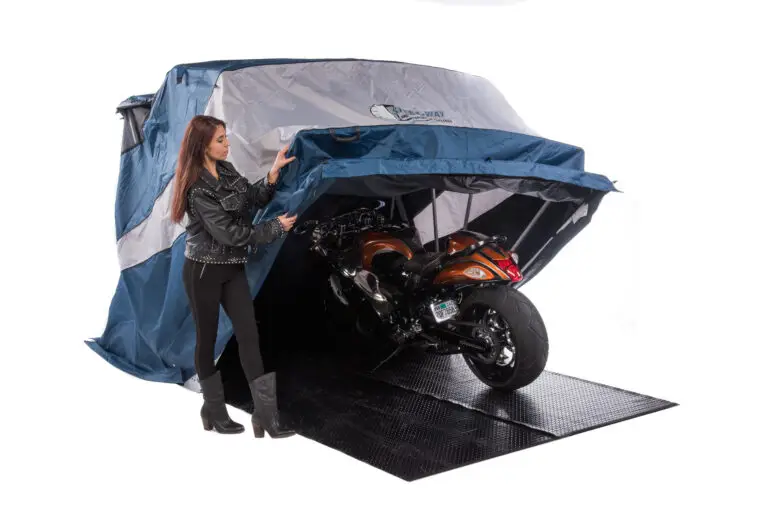
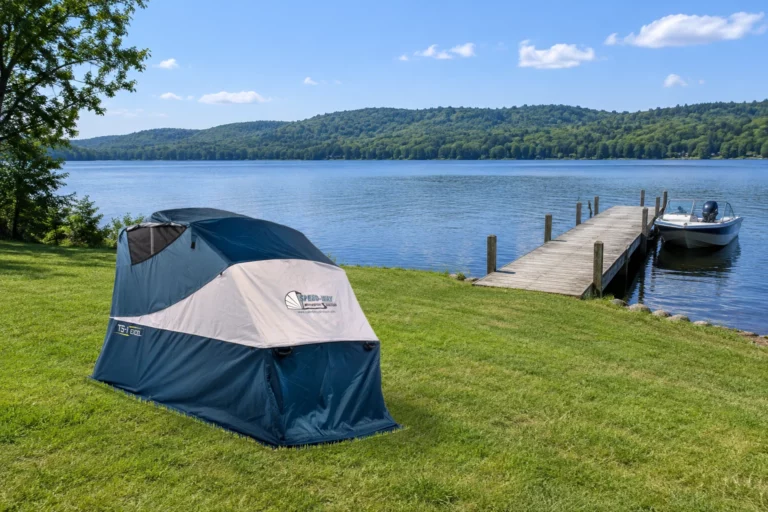
This is the fully enclosed kind. Molded pods are tough but cost the most and come in few sizes. A steel-frame shelter does the same job on a heavy-duty powder-coated frame with a 600D coated cover, bolts down, locks closed, and you can unbolt it and take it when you move. Ours come in three sizes: the Sport shelter for sport bikes, the Touring, a fully enclosed motorcycle cover sized for baggers, and the Deluxe portable motorcycle garage for trikes, Spyders and anyone who wants elbow room.

The Best Outdoor and Winter Motorcycle Cover

If the bike lives outside for months, the best motorcycle cover is the one that never touches it. Snow load, wind and trapped moisture are what wreck a soft cover over a winter, and a frame handles all three better than fabric alone. Our frame stands up to several feet of snow, but brush heavy snow off the roof anyway. Not sure which size you need? The size chart compares all three, and our shelter vs. tent vs. shed vs. cover comparison puts all four side by side.

How to Take Care of a Motorcycle Cover

Any cover, soft or on a frame, lasts longer with a little care. Wash it on a dry day, let it dry all the way, then spray on 303 Fabric Guard to bring back the water and stain repellency that wears off over time. For grease and grime on the seat or saddlebags, 303 Multi-Surface Cleaner lifts it without a greasy film. If you'd rather grab it all at once, the Cover Care Kit has Fabric Guard, a mold and mildew remover, Aerospace Protectant for the bike's plastic and vinyl, and microfiber. Don't use the Aerospace Protectant on the cover fabric; that's what Fabric Guard is for.

Motorcycle Cover: The Bottom Line

Motorcycle covers, despite their affordability and space-saving design, present several limitations in terms of protection, security, and maintenance. Consider your climate, riding frequency, and budget when choosing the best motorcycle storage solution for your ride. Opting for a more robust option like a shelter may offer better long term value and peace of mind, ensuring your motorcycle remains protected from rain, sun and dust and always ready for your next ride.

Not sure which shelter size fits your bike? Use our Will My Bike Fit? guide to match your bike style to a size.

Remember: Your motorcycle is an investment. Proper motorcycle storage is crucial in maintaining your bike’s value and ensuring its longevity. Don’t let cheapness overshadow the importance of adequate protection.

Motorcycle Cover Cost FAQ

How much is a motorcycle cover?

About $30 at the low end and up to $180 at the high end. The price mostly comes down to how heavy the fabric is and how big your bike is. A bagger needs more fabric than a sport bike. Even at the top of that range, a cover costs far less than a shelter, a pod or a storage unit.

Can you put a motorcycle cover on a hot bike?

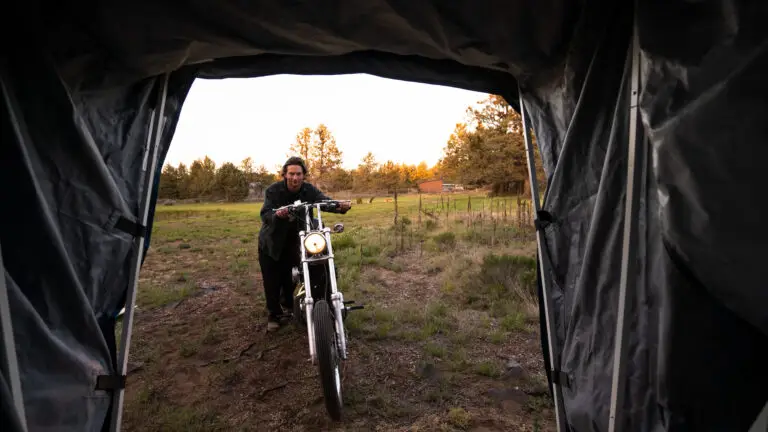
No. Let the engine and pipes cool all the way first, and that can take hours. Fabric resting on hot pipes can melt onto your chrome. A shelter works differently: the frame holds the cover off the bike, so you can ride in with hot pipes and close it.

Are motorcycle covers worth it?

For short stops and mild weather, yes. A cover keeps dust, sun and light rain off and folds up small. For a bike that lives outside all year, often not. Covers can tear in strong wind, crack in heat, trap moisture and rub dirt into the paint, and you have to pull one on and off after every ride.

Do motorcycle covers prevent rust?

Not on their own. A cover keeps rain off, but moisture can get trapped underneath, especially in humid places, and over time that can lead to rust and corrosion. After a wet or dusty ride, clean the bike before the cover goes on. Mold and mildew can also build up on the cover itself.

Does a motorcycle cover stop theft?

No. A cover hides the bike from a quick look, but anyone with a sharp blade can get it off in very little time. Treat it as a small deterrent, not security. That matters most if your bike sits in a public or shared parking spot.

How much does a motorcycle shelter cost compared to a cover?

A Speedway Shelter costs $429.95 for the Sport, $490.95 for the Touring and $574.95 for the Deluxe. That's well above a $30 to $180 cover. What you get for it: a steel frame with a 10-year warranty for the original owner, and when the cover wears out you replace just the cover, not the whole shelter.

How do I protect my motorcycle from rain?

Park it under a roof if you can. If it lives outside, use a cover that keeps water off without sealing wet air against the bike, and let a wet bike dry before you cover it. A frame-style shelter does this best because the cover never sits on the paint. On a fabric cover, a fresh coat of Fabric Guard helps the fabric shed rain.

Can you use a moped cover on a motorcycle?

Only on a small bike. Moped covers are cut short and narrow, so on a full-size motorcycle they ride up, leave the wheels and pipes out, and flap hard in the wind. Measure your bike's length and height and buy a cover that clears both.
Written by Joshua Mezman, owner

Joshua has owned Speedway Shelters since 2023. The business has sold heavy-duty motorcycle shelters from Soquel, California for more than 18 years. Questions about storing your bike? Email us (preferred) or call 831‑477‑9600, Mon–Fri, 9am–4pm PT.

More about Joshua →

Keep Your Bike Out of the Weather

A lockable shelter for your motorcycle on a heavy-duty steel frame that stands up to several feet of snow. Ride in with hot pipes, and nothing touches your paint.

Leave a Reply

Your email address will not be published. Required fields are marked *